
Congo and the Convenience of Empires
Congo has suffered, for centuries, from the peculiar misfortune of possessing things that other nations badly want.
Ivory, rubber, copper, cobalt, gold. The commodity changes, as does the language used to justify its extraction, yet the underlying arrangement has proved remarkably persistent. Arab traders came for slaves and ivory. The especially brutal Leopold came for rubber when it was realised that the motor car would benefit from having tyres on its wheels. Belgium built an economy around its extraction and was crueller than most people could imagine in securing what it wanted to enrich itself. Western governments later viewed Congo through the calculations of the Cold War and, in the 21st century, China approaches it as a vast mineral storehouse supporting its manufacturing empire.
These episodes are neither morally identical nor historically interchangeable, and it would be unfair to paint each colonial power with the same brush. Yet they do share one deeply troubling characteristic. Congo is repeatedly understood from the outside according to its usefulness to wealthy but distant places.
A report in The Times this week offers a particularly bleak contemporary example. An Ebola outbreak in eastern DRC has disrupted gold mining in Ituri, prompting Chinese companies to suspend activity and Beijing to advise its nationals to leave affected areas.
For the foreign company, departure is an economic decision. For the Congolese worker, there is usually nowhere to depart to.
David Kayomtho lost his job as a mechanic at a Chinese-run mine and found work screening patients at an Ebola treatment centre because his family still needed an income. Within days he became ill, and soon afterwards his wife and two of his sons also contracted the disease. His seven-year-old son, Ebenezer, died.
Although this is the story of one family among a population of around 100 million Congolese, the pattern it reveals is much larger and recognisable across time.
In 2024, before founding the Freedom and Justice Partnership, we visited mining communities around Kolwezi in southern DRC. We saw the other end of the mineral economy, far from the boardrooms in Beijing, London, Brussels or Washington where questions of supply security, industrial policy and the energy transition are discussed.
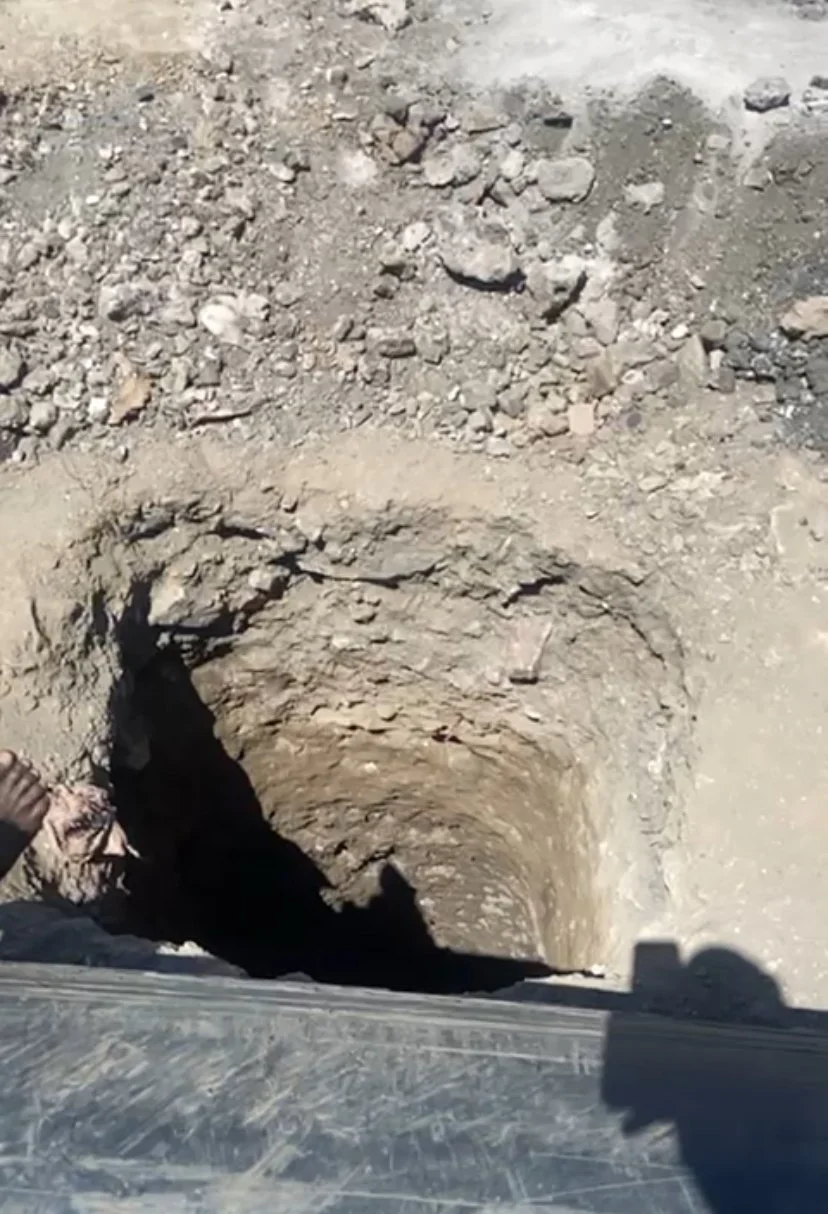
I took this photograph of artisanal mining tunnels in the earth into which children and adults descend in search of minerals. Some are little more than shafts cut through unstable ground, entered without the protections that most of us would consider elementary. A man or boy crawls underground because the alternatives available to him have been reduced to an intolerable few.
The children of these artisanal mining communities grow up watching this.
All of this is important because child labour in Congo cannot be understood solely as the wickedness of an individual mine owner or the failure of a particular supply chain. This brutal existence stems from a much older condition in which communities living above extraordinary mineral wealth have acquired remarkably little command over their own economic destiny. Each night many Congolese sleep above immensely valuable mineral deposits, and each day some risk their lives extracting resources from which they themselves will gain remarkably little.
A father who has spent his life at the edge of subsistence has limited power to offer his children a different future. Poverty, and the willingness to accept extraordinary risk for a meagre livelihood, become inherited conditions. A boy learns which tunnel produces ore, how to wash it, whom to sell it to and how much danger is considered normal.
The mineral will be transported and enter a sophisticated global supply chain, although the life at its beginning remains anything but sophisticated. The child who has spent twelve hours in toxic dust to extract it is not going anywhere.
And in all of this there is an uncomfortable lesson for us in the West as well.
Criticism of Chinese conduct in Congo may often be justified, but Europeans should approach the subject with a certain historical humility. Various European nations spent generations extracting Congo's wealth and subsequently participated in political arrangements designed around their own strategic interests. Western concern for ethical mineral supply chains has also grown at precisely the moment when access to critical minerals has become a matter of economic and national security.
Congolese families could therefore be forgiven for wondering whether they have once again become important because somebody elsewhere needs what lies beneath their feet.
The great question facing Congo is whether its mineral wealth can finally become a blessing that leads to the flourishing of its people rather than another curse of exploitation. That requires functioning institutions, decent employment, education, safer mining and communities with enough economic strength to resist the circumstances that send children underground.
The world will continue to want what the DRC possesses. Gold, copper and cobalt will remain valuable, and governments will continue to compete for access to them.
The measure of progress will be found elsewhere: in whether the people who live above that wealth acquire the freedom to build lives that do not depend upon crawling beneath it for the gain of faraway peoples.